
Ontario New-Home Closing Costs vs. Rebates in 2026: Worked Example for a Freehold Townhome
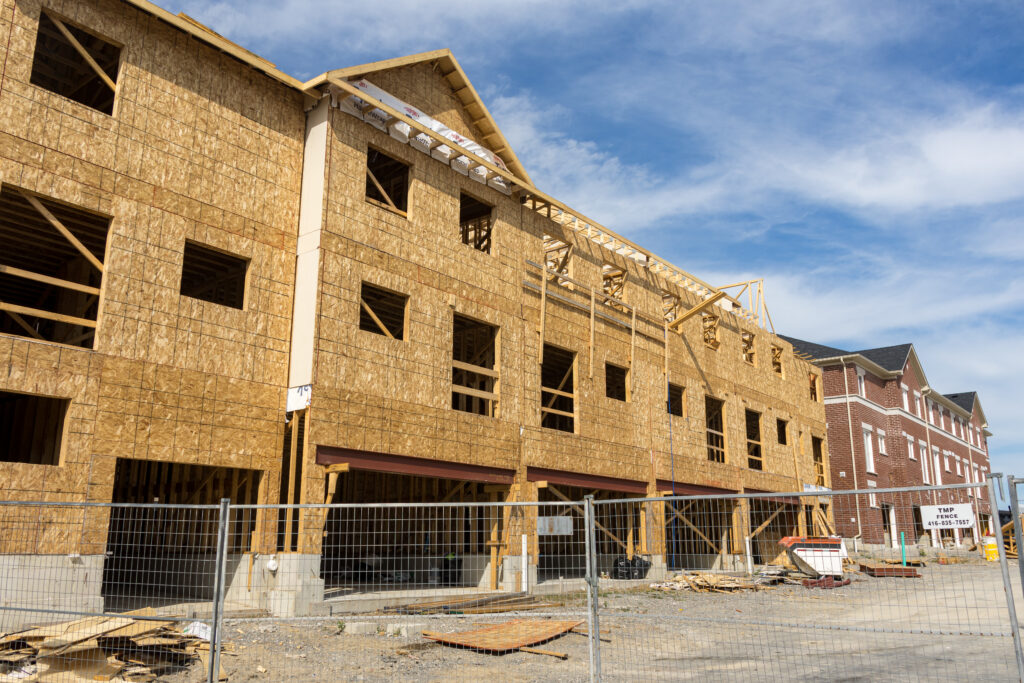
When you buy a new freehold townhome in Ontario, the purchase price is not the only amount you pay. On closing you also pay land transfer tax, legal fees, and the adjustments and builder charges listed in your agreement. As of October 2026, an eligible first-time buyer of a new home valued at or under $1 million may get back up to 100% of both the federal and the provincial parts of the HST. That can offset a large share of the bill, but the exact figures depend on your agreement and on whether you qualify.
This guide covers what closes on top of the price, a worked example for a $1 million GTA townhome, how your deposits fit in, and the questions to ask before you sign. The rebate rules come from the Canada Revenue Agency’s GST/HST new housing rebate guide (RC4028), which the CRA last updated on October 21, 2026.
What closes on top of the purchase price
Every agreement is different, but these are the items Ontario new-home buyers usually see on their statement of adjustments or their lawyer’s closing bill:
- Ontario land transfer tax. Charged on home purchases across the province and based on the value of the home. First-time buyers may qualify for a refund (see below).
- Toronto municipal land transfer tax. Charged only if the home is inside the City of Toronto, on top of the provincial tax. Buyers in Brampton, Oakville or Ajax do not pay it.
- HST. New homes are subject to HST, which has a 5% federal part and an 8% provincial part. Ask whether your price includes HST and whether you are assigning rebates to the builder, because this changes what appears on closing.
- Adjustments. Your share of items the builder has already paid, such as property tax, worked out to the closing date.
- Tarion enrolment fee. The fee to enrol the home in Ontario’s new-home warranty program. Some agreements include it in the price; others charge it on closing.
- Utility hookups and meters. Water meter, hydro connection and similar charges are often listed as closing adjustments.
- Development charges and levies. Usually built into the price, but some agreements pass increases on to the buyer.
- Legal fees and title insurance. Your real estate lawyer’s fee, disbursements and title insurance.
- Mortgage costs. Appraisal and, if your down payment is small, mortgage default insurance.
We do not quote fixed amounts for these items because they vary by builder, city and agreement. Your lawyer can give you an estimate once they have read your agreement.
The 2026 HST rebates at a glance
Several rebates now apply to new homes. Here is a summary of the rules in the CRA guide as of October 2026:
| Rebate | Part of HST | Value limit | Notes |
|---|---|---|---|
| GST/HST new housing rebate (standard) | Federal | Fair market value must be less than $450,000 | Not available on a $1 million home. |
| First-time home buyers’ (FTHB) GST/HST rebate | Federal | 100% at or under $1 million; gradually reduced between $1 million and $1.5 million; none at $1.5 million or more | For eligible first-time buyers. For owner-built houses, construction must begin on or after March 20, 2025 and before 2031, and be substantially completed before 2036. |
| Ontario new housing rebate | Provincial | No $450,000 cap | For owner-built houses the maximum is $24,000 if HST was paid on the land and $16,080 if not. |
| Ontario FTHB rebate | Provincial | Same eligibility as the federal FTHB rebate | Full or partial rebate of the provincial part of the HST. |
| Ontario enhanced new housing rebate (ENHR) | Provincial | Homes valued up to $1.85 million | Together with the Ontario new housing rebate, up to 100% of the 8% provincial part. For owner-built houses, construction must begin April 1, 2026 to March 31, 2027 and be substantially completed by Dec 31, 2029. |
| Ontario new home affordability payment (ONHAP) | Equal to the federal part | Up to $50,000 | Paid by the Province of Ontario to buyers eligible for the ENHR, reduced by the federal rebates you are entitled to. No separate application; you consent to share information on form GST191. |
Two more rules matter. First, all rebates of the 8% provincial part together cannot exceed the lesser of $80,000 and the provincial HST you actually pay. Second, an eligible buyer may claim the Ontario FTHB rebate, the ENHR, or both. A buyer who qualifies for the federal FTHB rebate must claim it before the ONHAP.
The construction dates in the CRA guide are stated for owner-built houses. If you are buying from a builder, ask the builder and your lawyer which dates apply to your agreement, when construction started, and when the home is expected to be substantially completed.
Worked example: a $1 million GTA freehold townhome
Assumptions for this example:
- The townhome’s fair market value is $1 million.
- It is in Brampton, Oakville or Ajax, so there is no Toronto land transfer tax.
- The buyer meets every eligibility condition, including the agreement and construction dates.
- This is an illustration of how the rebates fit together, not a quote.
| Item | Eligible first-time buyer | Repeat buyer eligible for the ENHR |
|---|---|---|
| Federal part of HST (5% of $1 million) | $50,000 | $50,000 |
| Standard GST/HST new housing rebate | Not available (value is not under $450,000) | Not available |
| Federal FTHB GST/HST rebate | Up to 100% of the federal part: $50,000 | Not eligible |
| ONHAP | Reduced by the federal FTHB rebate; if that rebate is the full $50,000, nothing extra | Up to $50,000 |
| Provincial part of HST (8% of $1 million) | $80,000 | $80,000 |
| Ontario rebates on the provincial part | Ontario FTHB rebate and/or ENHR, combined up to $80,000 | Ontario new housing rebate plus ENHR, combined up to $80,000 |
| HST left after rebates (if every rebate applies in full) | Possibly none | Possibly none |
| Ontario land transfer tax | Ask your lawyer; a first-time buyer refund may apply | Ask your lawyer |
| Toronto municipal land transfer tax | Not applicable outside Toronto | Not applicable outside Toronto |
| Legal fees, Tarion fee, utility hookups, adjustments | Per your agreement and lawyer’s quote | Per your agreement and lawyer’s quote |
What the example shows. If every rebate applies, the HST line can shrink to little or nothing. The cash you still need on closing is then mostly land transfer tax, legal fees and the builder’s adjustments. Those are the items to get in writing early.
Watch the $1 million line. The federal FTHB rebate is full only at or under $1 million, and the CRA uses fair market value, which is not necessarily the price on your agreement. A home valued slightly above $1 million gets a reduced federal rebate, and there is none at $1.5 million or more. The ENHR applies to homes valued up to $1.85 million, so provincial relief may still be available above $1 million if you qualify.
Watch how the money arrives. Some rebates may be credited by the builder on closing, while the ONHAP is paid by the Province. Ask your lawyer which amounts reduce your closing cash and which come later, because money that arrives after closing does not help you on closing day.
Land transfer tax and the first-time buyer refund
Ontario charges land transfer tax on home purchases, new or resale, and it is paid on closing. First-time buyers may apply for a refund of some or all of the provincial tax. Toronto buyers pay a separate municipal land transfer tax and may also qualify for Toronto’s own first-time buyer rebate.
We have not listed tax brackets or refund amounts here because we could not confirm the current figures on the Ontario and City of Toronto websites for this update. Your lawyer will calculate the exact amount for your purchase. Keep in mind that the land transfer tax refund and the HST rebates are separate programs with their own rules. Qualifying for one does not mean you qualify for the other. Plan to pay any land transfer tax that is not refunded in cash on closing day.
Development charges and lot levies: what is already in the price
Development charges are fees that municipalities charge on new homes to help pay for roads, water, sewers, transit and parks. On a new freehold townhome, the builder pays them, and they are normally built into the price you see.
The risk is in the fine print. Some agreements say the buyer pays any increase in development charges or any new levy introduced after signing. Others cap these charges, or state that the price includes them. Read the schedules for wording on development charges, education development charges, lot levies and caps. If there is a cap, note the amount and ask your lawyer to confirm it.
We have not listed charges for Brampton, Oakville or Ajax because they are set locally and change over time. Ask the builder for the current figures and any cap in writing.
Cash needed on closing versus deposit paid: a timeline
Your deposits count toward the purchase price, but they are not the same as your closing costs. This timeline shows where each payment usually falls:
| Stage | What usually happens | What to ask |
|---|---|---|
| Signing the agreement | First deposit, as set out in the agreement | The full deposit schedule and how deposits are protected |
| Deposit instalments | Further deposits on the dates in the agreement | Total deposit and due dates |
| Construction | Builder may give notice of closing date changes | Tentative and firm closing dates, and the extension rules |
| Weeks before closing | Lawyer receives the statement of adjustments; lender orders an appraisal and confirms the mortgage | Ask for a draft statement of adjustments as early as possible |
| Closing day | Balance of the price (less deposits and any credited rebates) paid through your mortgage and your cash; land transfer tax, legal fees and adjustments paid | The final cash figure from your lawyer |
| After closing | Any rebate not credited on closing is applied for or paid | How and when each rebate is paid |
On closing, your mortgage covers most of the balance. You cover the rest of your down payment that your deposits did not already cover, plus the closing costs.
Appraisal gap and mortgage rules
Lenders lend based on the appraised value of the home. If a townhome you bought before construction appraises below your price at closing, the lender may lend less than you planned. You then need to cover the gap in cash on closing day, on top of land transfer tax and other costs.
Mortgage rules matter too. Your income, debts, the interest rate and the qualifying rules in force at closing, not when you signed, decide how much you can borrow. Ask a mortgage broker to re-check your approval a few months before closing, and keep a cash buffer in case the appraisal or your approval changes.
Examples: Brampton, Oakville and Ajax buyers
Brampton. Brampton is outside Toronto, so there is no Toronto land transfer tax; the provincial tax applies. Ask the builder whether local development charges are included or capped, and which HST rebates the home is expected to qualify for. Browse pre-construction homes in Brampton.
Oakville. The same land transfer tax rules apply as in Brampton. If the home you are looking at is valued above $1 million, the federal FTHB rebate starts to shrink and ends at $1.5 million. The Ontario ENHR still applies to homes valued up to $1.85 million if you are eligible. See pre-construction homes in Oakville.
Ajax. Again, no Toronto land transfer tax. For buyers here, the key question is timing: when construction started and when the home will be substantially completed, since the rebates depend on dates. See new homes in Ajax.
If you are considering a move-in-ready home, construction dates matter even more, because the home may already be built. Ask whether it qualifies before you sign.
Checklist: questions to ask the builder before signing
- Does the price include HST, and am I assigning any rebates to you?
- Which rebates do you expect this home to qualify for: the federal FTHB rebate, the Ontario FTHB rebate, the ENHR or the ONHAP?
- When did construction start, and when do you expect the home to be substantially completed?
- How will rebates be credited: in the price, on the statement of adjustments, or paid to me after closing?
- Can my lawyer see a draft statement of adjustments early? (Builders claiming the FTHB GST/HST rebate, Ontario FTHB rebate or ENHR using Application Type 1A or 1B must include the statement of adjustments and the signed purchase agreement with each claim.)
- Will I need to give consent on form GST191 for the ONHAP?
- Are development charges, education development charges and levies included in the price or capped? What is the cap?
- Is the Tarion enrolment fee included or charged on closing?
- Which utility hookup, meter and other charges will appear on closing, and are any capped?
- What is the deposit schedule, and how are deposits protected?
- What are the tentative and firm closing dates?
- Could upgrades or extras change the home’s value for rebate purposes?
Frequently asked questions
What closing costs do I pay on a new home in Ontario?
Usually land transfer tax (plus the Toronto tax if the home is in Toronto), legal fees and title insurance, and the adjustments in your agreement, such as property tax, utility hookups and the Tarion enrolment fee. HST depends on how your price is written and which rebates apply.
Can I get the HST rebate on a $1 million townhome?
As of October 2026, an eligible first-time buyer may get 100% of the federal part on a home valued at or under $1 million, plus Ontario rebates of the provincial part up to the lesser of $80,000 and the provincial HST paid. The standard federal rebate is not available, because it requires a value under $450,000.
Do I pay Toronto land transfer tax in Brampton, Oakville or Ajax?
No. The Toronto municipal land transfer tax applies only inside the City of Toronto. The Ontario land transfer tax still applies.
Who pays development charges on a new townhome?
The builder pays them, and they are normally in the price. Check your agreement for clauses that pass increases or new levies to you, and for any cap.
Is my deposit part of my closing costs?
No. Deposits are credited toward the price. Closing costs are extra and are mostly paid in cash on closing day.
Next steps
Rebates and closing costs depend on your agreement, your eligibility and your city, so a general example only goes so far. Book a call with Tall Property at 416-878-0749 or through tallproperty.com, and we will help you put together a personalized closing-cost sheet to review with your lawyer before you sign. You can also browse pre-construction townhomes across the GTA. For the full rebate rules, see the CRA’s RC4028 guide.
Disclaimer: This is general information, not legal or tax advice. Rebate eligibility and closing costs depend on your situation and your agreement; speak to a real estate lawyer or accountant before you sign.
Questions about a project? Ask us
Why register with TallProperty
- First access to pricing and floor plans, often before the public launch.
- Builder incentives and deposit structures, explained in plain language.
- New launches in the areas and home types you choose, by email.
- Free to register. Prefer to talk? Call 416-878-0749.
Related articles
 Condos
All About Condo Inspection in Canada
Feb 20, 2023 · All About Condo Inspection in Canada: 15 Frequently Asked Questions Answered with Real-Life Examples and Market Research Data If you are… Closing cost in Ontario
Frequently Asked Questions About Home Inspection in Canada – A Comprehensive Guide
Feb 19, 2023 · Buying a home is a major investment and it is one of the most important purchases you will make in your lifetime.… Closing cost in Ontario
Leveraging Home Equity to buying Pre Construction Condo in 2023
Feb 16, 2023 · Investing in real estate is a smart way to build wealth over time, and buying a pre-construction condo can be a particularly… Condos
Mistakes to Avoid when buying a Pre-Construction Condo
Feb 16, 2023 · Buying a pre-construction condo in Canada can be an exciting opportunity for first-time homebuyers or seasoned investors. However, it's crucial to proceed… Closing cost in Ontario
11 Things You Must Know Before Buying A Preconstruction Condo
Feb 16, 2023 · Buying a preconstruction condo can be an exciting and rewarding experience, but it can also be a complicated and confusing one. There…Explore new homes
- New homes in Toronto
- New homes in Mississauga
- New homes in Oakville
- New homes in Vaughan
- New homes in Brampton
- New homes in Markham
- New homes in Hamilton
- New homes in Calgary
- New homes in Richmond Hill
- New homes in Kitchener
- Townhomes
- Condos
- Detached homes
- Move in 2027
- Move in 2028
- Move in 2029
- Coming soon
- Selling now
- Move-in ready