
New Condos and Homes in Entertainment District, Toronto
5 pre-construction projects in Entertainment District on TallProperty, plus new launches across Toronto. Below: prices and move-in years, then our guide to living here.
New projects in Entertainment District
 Coming Soon
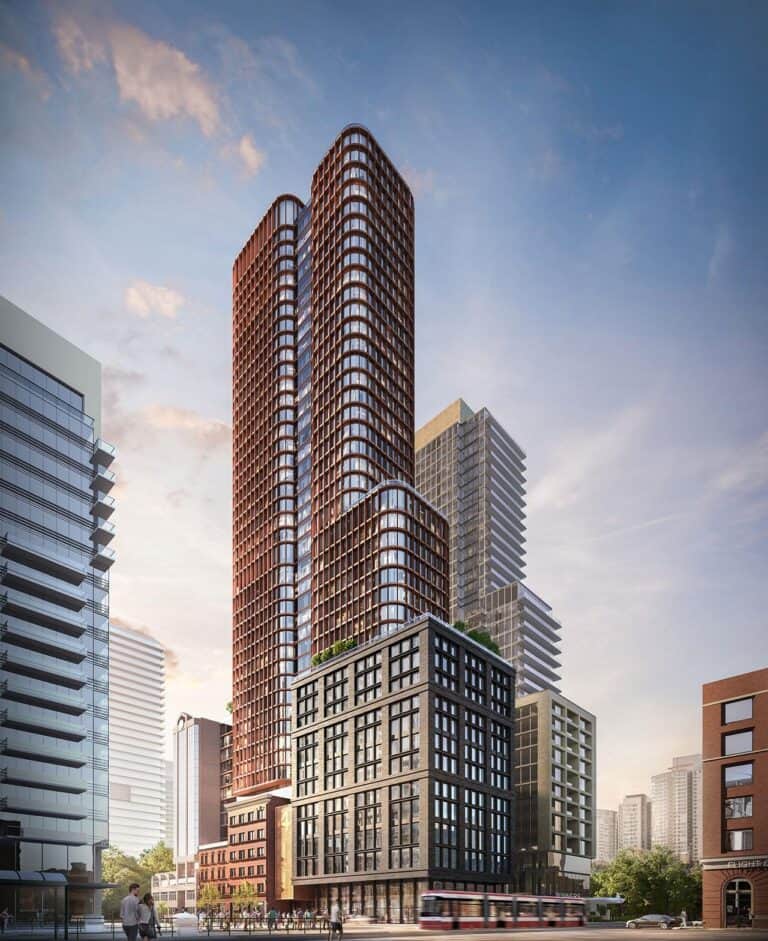
101 Spadina Condos
From $585,000By Great Gulf HomeEntertainment District, Toronto
Condos
Move-in 2030
 Coming Soon
Four Eleven King Condominiums
By Great Gulf and TerracapEntertainment District, Toronto
Condos
 Coming Soon
Natasha Residences
From $730,000By Lanterra DevelopmentsEntertainment District, Toronto
Condos
Move-in 2028
 Coming Soon
FORMA Condos 2
From $820,900By Great GulfEntertainment District, Toronto
Condos
 Move-in Ready
Peter & Richmond Condos
By Carlyle CommunitiesEntertainment District, Toronto
Condos
Move-in 2025
More projects in Toronto
 Selling Now
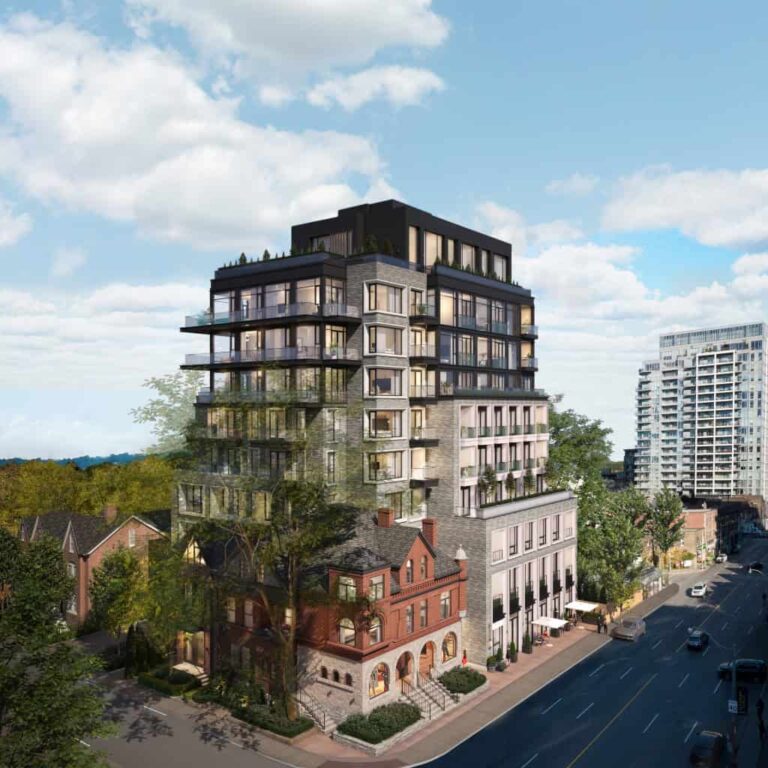
One Ten Avenue
By Sierra Development GroupToronto
 Selling Now
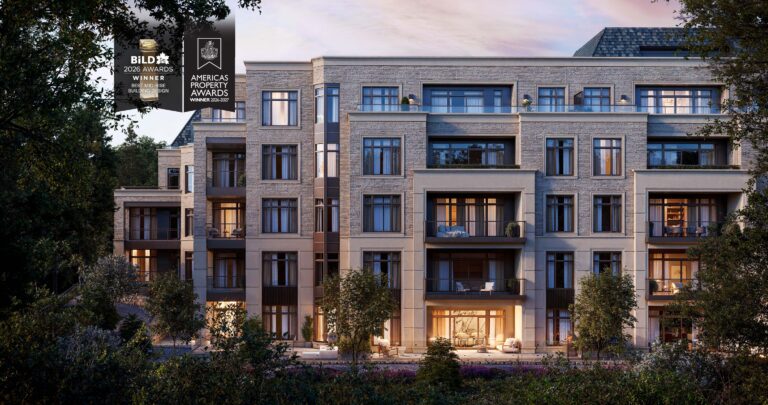
The Chatsworth
By Times Group CorporationToronto
Condos
 Selling Now
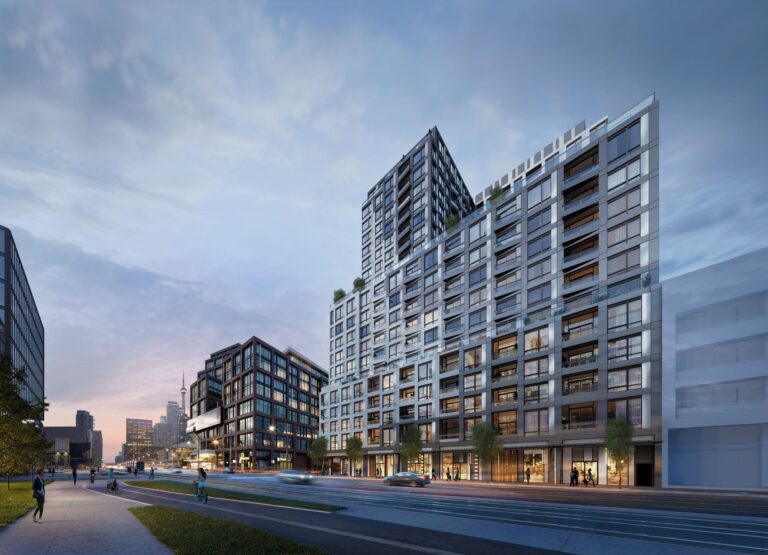
Quay House
By Empire CommunitiesToronto
Condos
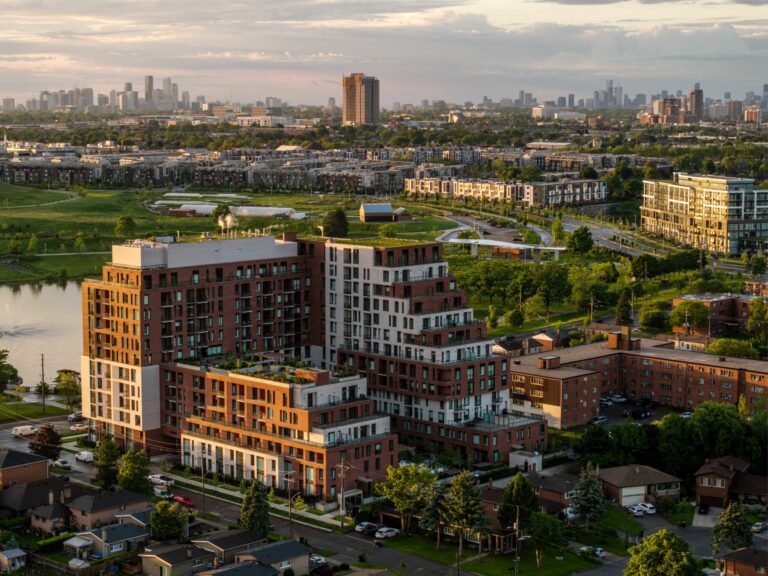 Selling Now
The Keeley
By TASToronto
Condos, Detached homes, Townhomes
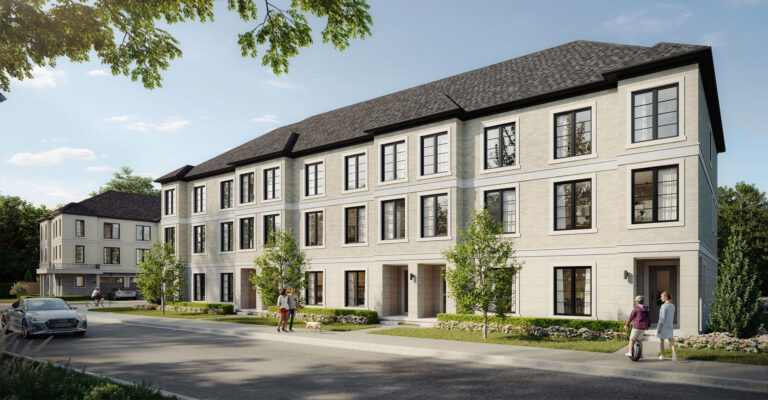 Selling Now
The Gramercy
By Icon HomesToronto
Detached homes, Townhomes
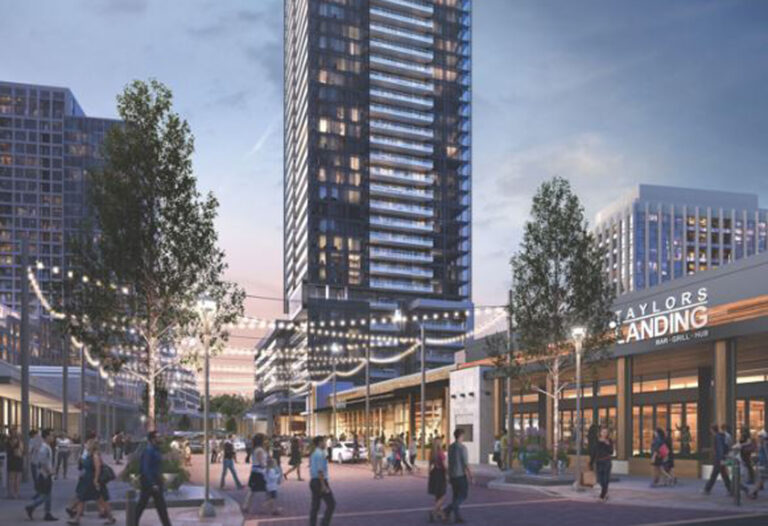 Selling Now
Rodeo Townhomes
By Lanterra DevelopmentsToronto
Condos, Detached homes, Townhomes
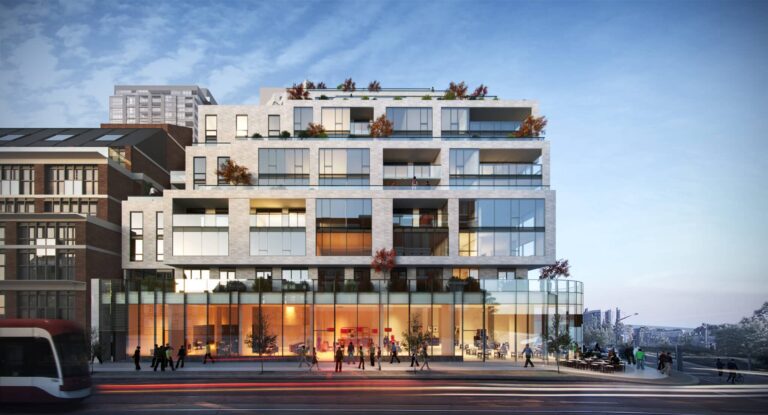 Selling Now
1181 Condos on Queen West
By Skale DevelopmentsToronto
Condos
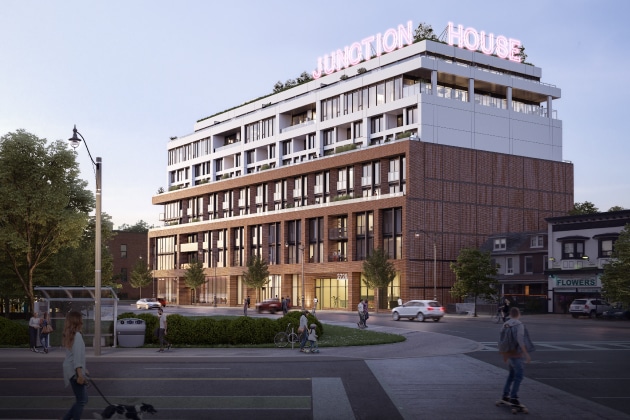 Selling Now
Junction House
By Slate Asset ManagementToronto
Condos, Detached homes
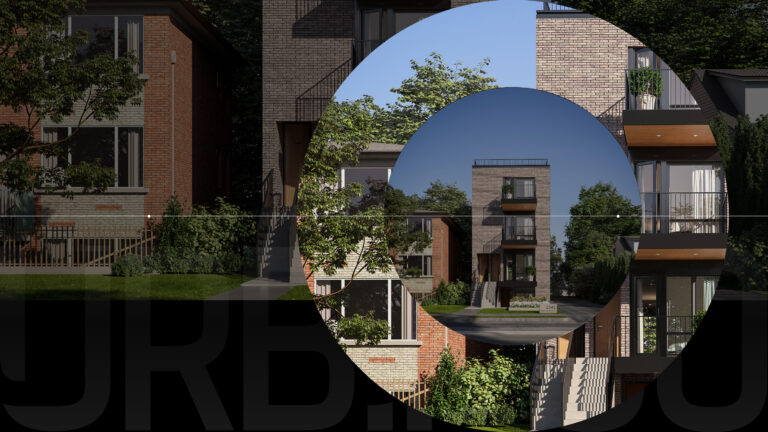 Selling Now
The Walk-Up
By urbin CoToronto
Condos, Detached homes, Townhomes
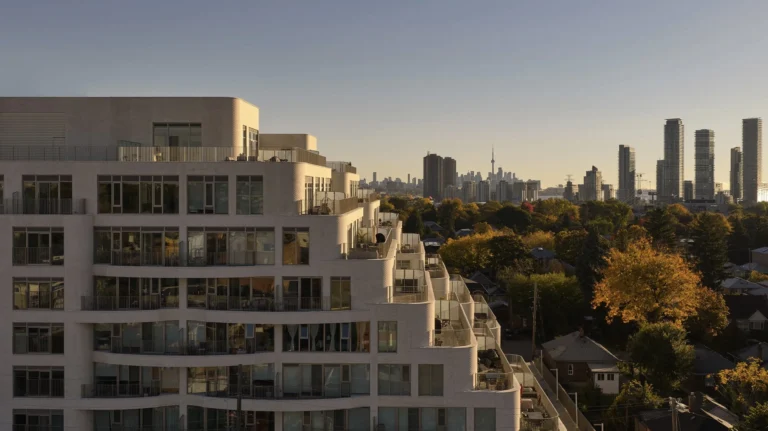 Selling Now
Reina
By Urban CapitalToronto
Condos
The Entertainment District is downtown Toronto's theatre, film and nightlife quarter along King Street West, and it is one of the busiest places in the city for new high-rise condos. It suits buyers who want to walk to work, to shows and to restaurants, and who are comfortable in a smaller suite in a tall building. The City doesn't draw an official line around the Entertainment District. It sits in the eastern part of the City's King-Spadina Secondary Plan area, which a 2019 City planning report describes as generally bounded by Queen Street West, Front Street West, Bathurst Street, Simcoe Street and John Street. Most people use the name for the blocks between roughly John Street and Spadina Avenue.
The same report counts just under 22,000 King-Spadina residents in 2018, up from 945 in 1996. This guide covers what is going up, prices and buyer rules as of October 2026, transit, schools, parks and jobs.
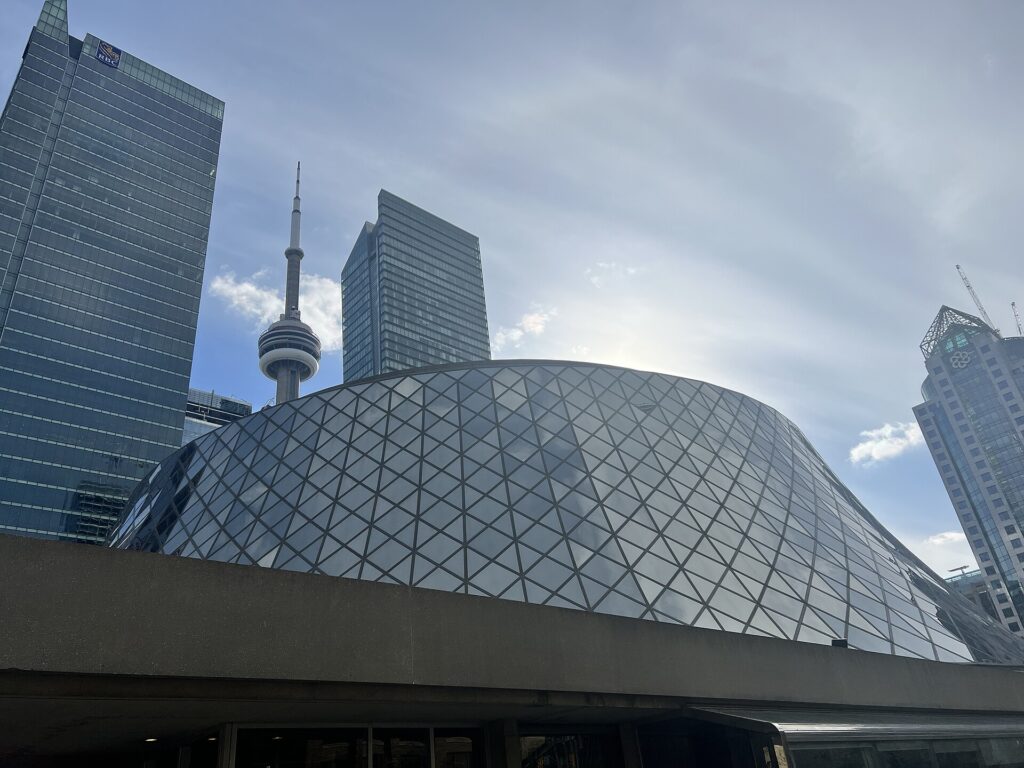
Top photo: Roy Thomson Hall, with the CN Tower behind. Photo: Richard Eriksson from Toronto, Canada, CC BY 2.0, via Wikimedia Commons.

What is being built in the Entertainment District
New homes here are almost all condominium suites in high-rise towers, often on top of a podium with offices, shops or a hotel. Many towers keep the front of an older warehouse or office building at street level, because the City's plan for King-Spadina aims to conserve the area's heritage character and encourages new buildings to replace the office and workspace they take down. Under the Downtown Plan, buildings with more than 80 suites must include at least 10% three-bedroom and 15% two-bedroom suites, so larger layouts exist, but most are studios and one-bedrooms.
Projects we list here include Natasha Residences by Lanterra Developments at Adelaide and John Streets, which is under construction; the second tower of FORMA by Great Gulf on King Street West, where the first tower is being built and the developers have said the second will wait for a better market; and Four Eleven King at King and Spadina. See the Entertainment District project list for everything we track here, or the Toronto pre-construction list to filter by move-in year and price. Builders active in the area include Great Gulf and Lanterra Developments.


Heritage rules in King-Spadina
Much of the area is inside the King-Spadina Heritage Conservation District, which City Council designated in 2017 and the Ontario Land Tribunal approved in 2024. It protects the area's late-19th and early-20th century warehouses and offices. For condo buyers this mostly shows up as old façades kept at the base of new towers.
Prices and the market as of October 2026
Toronto's resale condo market is soft as of October 2026, which gives buyers more room to negotiate. In September 2026 the Toronto Regional Real Estate Board reported an average condo apartment price in the City of Toronto of $640,248, down 6.1% from a year earlier, and a benchmark condo price of $543,800, down 6.4%. Across the GTA, 5,040 homes of all types sold, 9% fewer than a year before, at an average of $1,006,409.
Two other things to know: the Bank of Canada raised its policy rate to 2.50% on October 28, 2026 and said further increases are possible, and CMHC reports Toronto rents are still easing as many new condos are finished and rented out (purpose-built vacancy was 3.0% in its 2025 survey). New suites usually cost more than resale ones, so compare both, and include the 2026 HST relief below, which applies only to new homes.
In a tower still selling, your price comes from the builder's current price list and incentives, not resale averages. Ask too what parking and a locker cost, since many suites come without either.
Getting around
Most residents walk. St Andrew station on Line 1 is at King Street and University Avenue (it is accessible, with two elevators), Osgoode station is one stop north, and Union Station, with GO Transit and the UP Express to Pearson, is a short walk south-east. The PATH underground walkway links the area to the Financial District and Yonge Street.
The 504 King streetcar is the main surface route, and streetcars also run on Spadina Avenue. Expect changes on King: the TTC says from November 1, 2026 the 504 runs as a single branch between Dundas West and Broadview stations, and will later divert along Queen Street West during watermain and track work (dates not yet set).
The Ontario Line, under construction, will add a King West station at King and Bathurst, connecting with the 504 King and 511 Bathurst streetcars, and an expanded Osgoode station linked to Line 1. Metrolinx has not published an opening date. Drivers use the Gardiner Expressway a few blocks south.


Schools and colleges
Public schools are run by the Toronto District School Board and Catholic schools by the Toronto Catholic District School Board. Local schools can fill up as towers open, so check any address with the TDSB school locator and the TCDSB school locator before you buy. OCAD University, Toronto Metropolitan University and the University of Toronto are a short transit ride north, which keeps rental demand from students steady.
Parks and public spaces
Green space is limited, which is why the parks here are well used. David Pecaut Square at Metro Hall (55 John Street) hosts Toronto International Film Festival events and other gatherings. Clarence Square, Victoria Memorial Square and St. Andrew's Playground are the three historic parks named in the heritage district. The waterfront trails along Queens Quay are a walk south. The City's planning report notes the area has few parks for its growing population.


Jobs nearby
King-Spadina is a major job centre in its own right: the City counted 45,940 employees in 2018, more than double the 21,403 in 1996, and its plan treats the area as a Cultural Precinct for creative industries and culture-sector businesses. The Financial District is next door; the Downtown Plan extended its boundary west along King Street to John Street and south to Front Street and Blue Jays Way. Altogether, the City's TOcore plan counts more than 500,000 jobs downtown.


Who the Entertainment District suits
- Downtown workers in finance, law, tech or the film and culture sector who want to walk to the office.
- First-time buyers looking at a studio or one-bedroom, who may qualify for the 2026 HST relief on new homes described below.
- Investors counting on rental demand from students and young professionals; with rents easing as of October 2026, compare likely rent with fees and mortgage costs first.
- Downsizers who want theatres, concert halls and restaurants on the doorstep and don't mind city noise.
- If you want quieter streets and lower buildings, look west at King West Village; families who need a yard usually do better in North Toronto or Bloor West Village. For the wider core, see our Downtown Toronto guide.
Rules every new-home buyer should know in 2026
- HST relief on new homes, for all buyers who will live there. For agreements signed between April 1, 2026 and March 31, 2027, Ontario's enhanced new housing rebate covers up to $80,000 of the 8% provincial HST, and the Ontario New Home Affordability Payment adds up to $50,000 toward the federal 5%: up to $130,000 in total. Relief is full up to $1 million, stays at the cap to $1.5 million and phases out by $1.85 million. The home must be your (or a relative's) primary residence.
- First-time buyers. The federal First-Time Home Buyers' GST rebate (law since March 2026) removes up to $50,000 of GST on a new home of up to $1 million, phasing out by $1.5 million, for agreements signed on or after March 20, 2025 and before 2031. The Ontario payment is reduced by any federal rebate you claim, so the two don't stack beyond the full tax.
- Investors who will rent the suite out don't get the primary-residence relief above; a separate rental-property rebate applies, so get tax advice before you sign.
- 30-year mortgages. Since December 15, 2024, insured mortgages can run 30 years for first-time buyers and for anyone buying a newly built home, and insured mortgages are allowed on homes up to $1.5 million.
- Deposit protection. Tarion protects condo deposits up to $20,000, and you get a 10-day cooling-off period on a new condo after you receive the signed agreement and disclosure statement. Check the builder's licence in the HCRA Ontario Builder Directory.
- Land transfer tax. First-time buyers can get back up to $4,000 of Ontario's land transfer tax (ontario.ca) and up to $4,475 of Toronto's municipal land transfer tax (toronto.ca). Toronto homes pay both taxes.
This is general information, not legal, tax or mortgage advice. Rules change; check the linked official pages or ask us before you sign.
Talk to us
Tall Property tracks new condos and homes across Toronto and the GTA. Call us at 416-878-0749 or use the form on this page for price lists, floor plans, current incentives and VIP access to new launches. We'll also tell you honestly when a resale suite is the better buy.
Questions about Entertainment District
How much does a new condo cost in the Entertainment District?
New suites are priced project by project, so ask for each building's price list. As a guide, the Toronto Regional Real Estate Board reported an average resale condo apartment price of $640,248 in the City of Toronto in September 2026, down 6.1% from a year earlier. New suites usually cost more than resale, but for agreements signed from April 2026, buyers who will live in a new home can get up to $130,000 of HST back, which narrows the gap.
Where exactly is the Entertainment District?
It has no official boundary. It is the eastern end of the City's King-Spadina planning area, which is generally bounded by Queen Street West, Front Street West, Bathurst Street, Simcoe Street and John Street. Most people mean the blocks around King Street West between John Street and Spadina Avenue.
Is it noisy living in the Entertainment District?
It can be. The City's own plan describes theatres, live music venues and a busy nighttime economy here. When you choose a suite, ask about its floor, which way it faces, and the window and wall specifications, and walk the block on a Friday night before you sign.
Will the Ontario Line stop in the Entertainment District?
Nearby, yes. Metrolinx is building a King West station at King and Bathurst and an expanded Osgoode station linked to Line 1. The line is under construction and Metrolinx has not published an opening date.
Is there an HST rebate on a new condo in 2026?
Yes, and it is much bigger than before. If you sign with a builder between April 1, 2026 and March 31, 2027 and the home will be your primary residence, Ontario's enhanced new housing rebate and the Ontario New Home Affordability Payment together can cover up to $130,000 of HST: the full tax up to $1 million, capped to $1.5 million and phasing out by $1.85 million. First-time buyers also have the federal First-Time Home Buyers' GST rebate of up to $50,000. Check your own situation with a lawyer or accountant before signing.
Can I get a 30-year mortgage on a pre-construction condo?
Yes. Since December 15, 2024, insured mortgages can be amortized over 30 years for first-time buyers and for anyone buying a newly built home, and insured mortgages are available on homes up to $1.5 million. You still have to pass the mortgage stress test when the suite closes, often years after you sign, so leave a margin.
How much deposit do I need, and is it protected?
Each builder sets its own deposit schedule, usually paid in stages over the first year or two; we can send the current schedule for any project. For condos, the deposit is held in trust and Tarion protects up to $20,000 of it if the builder can't complete. You also have a 10-day cooling-off period after signing to cancel without penalty.
What happens if my condo's occupancy is delayed?
Your agreement sets the dates and how the builder must give notice of a delay. If the builder misses them without a permitted reason, Tarion compensation can reach $7,500, including $150 a day for living expenses. Mutually agreed extensions and unavoidable delays are not covered.
Get new launches in Entertainment District first
Why register with TallProperty
- First access to pricing and floor plans, often before the public launch.
- Builder incentives and deposit structures, explained in plain language.
- New launches in the areas and home types you choose, by email.
- Free to register. Prefer to talk? Call 416-878-0749.
More neighbourhood guides
- Cabbagetown Toronto
- Cooksville , Mississauga
- Downtown Toronto
- Financial District Toronto
- Humber Bay , Toronto
- Kensington , Toronto
- King West Village , Toronto
- Lawrence Park Toronto
- North Toronto , Toronto
- Riverdal Toronto
- Roncesvalles, Toronto
- Rosedale-Moore Park Toronto
- Runnymede-Bloor West Village Toronto
- Sqaure One Mississauga
Explore new homes
- New homes in Toronto
- New homes in Mississauga
- New homes in Oakville
- New homes in Vaughan
- New homes in Brampton
- New homes in Markham
- New homes in Calgary
- New homes in Hamilton
- New homes in Richmond Hill
- New homes in Kitchener
- Townhomes
- Condos
- Detached homes
- Move in 2027
- Move in 2028
- Move in 2029
- Coming soon
- Selling now
- Move-in ready